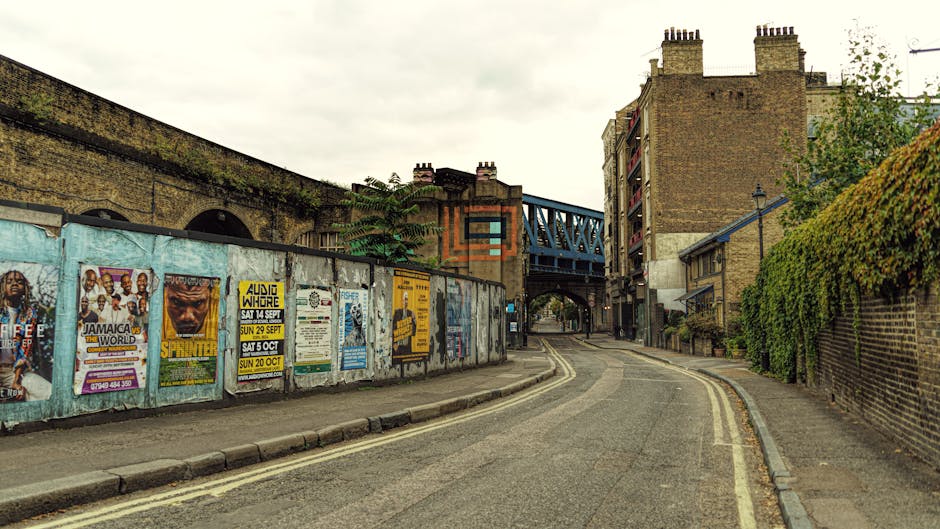
Avoid hidden removal charges for Bermondsey moves
If you are planning a move in Bermondsey, the price you first hear is not always the price you end up paying. That is the annoying bit, isn't it? Hidden extras can creep in through parking problems, awkward access, waiting time, packing materials, or vague "additional service" fees. This guide explains how to avoid hidden removal charges for Bermondsey moves, what to ask before you book, and how to spot a quote that looks cheap but really isn't.
Whether you are moving out of a flat near the river, a warehouse-style conversion, or a family home tucked behind a busy road, the same rule applies: clarity saves money. In practice, a little checking up front can make the whole day calmer. Less stress, fewer surprises, and no awkward conversation when the van has already arrived. Let's get into the detail.
Table of Contents
- Why it matters
- How hidden removal charges happen
- Key benefits and practical advantages
- Who this is for and when it makes sense
- Step-by-step guidance
- Expert tips for better results
- Common mistakes to avoid
- Tools, resources and recommendations
- Law, compliance, standards, or best practice
- Options, methods, and comparison table
- Case study or real-world example
- Practical checklist
- Conclusion
- Frequently asked questions
Why Avoid hidden removal charges for Bermondsey moves Matters
Removal costs are one of those things that seem straightforward until they are not. A quote might look competitive at first glance, but the final invoice can end up higher because the mover treated a normal part of the job as an extra. For a Bermondsey move, that matters even more because local streets, parking pressure, and access issues can turn a simple job into a more complex one if nobody has planned properly.
Truth be told, many people focus only on the headline price. It is understandable. Moving is already expensive, and you are juggling a hundred other things. But hidden charges are often avoidable when the quote is detailed, the inventory is accurate, and both sides have the same expectations. That is the real aim here: not just paying less, but paying fairly for the work you actually need.
It also matters because a surprise fee can land right at the worst moment, when you are tired, the kettle is packed, and the day is moving faster than you would like. Nobody enjoys arguing over whether a mattress should have been carried upstairs, or whether the move counted as a "long carry" because the van could not stop outside. If you can prevent those issues in advance, you should.
How Avoid hidden removal charges for Bermondsey moves Works
There is no magic trick here, sadly. Avoiding hidden charges comes down to matching the quote to the real move as closely as possible. A serious removal company will usually want details about the property, the access, the distance between the van and the door, the number of rooms, whether packing is required, and any difficult items such as pianos, large wardrobes, or fragile artwork.
In Bermondsey, that detail matters because location shapes cost. A second-floor flat with no lift, a narrow stairwell, and limited parking is very different from a ground-floor property with easy loading. Even the time of day can affect what happens on move day. Early starts, busy roads, and loading restrictions can all change the plan slightly. None of that is unusual, but it does need to be priced honestly.
The best way this works in real life is simple: ask for a written quote that spells out what is included and what is not. If something might be extra, get it named before the job starts. A decent mover should be able to explain that clearly without getting defensive. If they cannot, well, that tells you quite a lot on its own.
You may also hear terms like fixed quote, hourly rate, call-out fee, or access charge. These are not automatically bad. The issue is whether they are transparent. A fixed quote can still have exclusions. An hourly rate can still be fair if the time estimate is realistic. The problem begins when the small print does the talking instead of the salesperson.
Key Benefits and Practical Advantages
Getting pricing right is not just about saving a few pounds. It makes the whole move more predictable. And predictability, during a house move, is worth a lot more than people admit.
- Better budgeting: You can plan around the real cost instead of a hopeful guess.
- Less move-day stress: No surprise disputes while boxes are halfway onto the van.
- Faster decisions: Clear prices make comparison easier, especially if you are shortlisting several firms.
- Better service fit: A detailed quote usually means the company has thought through the job properly.
- Fewer delays: When access, parking, and packing are discussed early, the team can work more efficiently.
There is also a quieter benefit that people often notice only afterwards: confidence. Once you know the quote is properly based on the move, you stop second-guessing every line item. You can focus on the key stuff, like keys, utilities, and whether the tea bags were packed last night or somehow vanished into a box marked "misc."
For Bermondsey moves specifically, a transparent quote can also help you compare apples with apples. One company might appear cheaper until you realise their price does not include stairs, waiting time, or dismantling. Another may be slightly higher upfront but more honest overall. The "cheaper" option is not always cheaper. That is the annoying little trap.
Who This Is For and When It Makes Sense
This approach makes sense for almost anyone moving in or out of Bermondsey, but it is especially useful if any of the following apply:
- You live in a flat block with lift restrictions or stair access.
- You need help with packing, dismantling, or reassembly.
- You are moving during a busy period, such as a weekend or month-end.
- Your street has limited parking or loading space.
- You have bulky items that may need extra handling.
- You want a fixed price rather than an open-ended hourly estimate.
If you are moving a studio, you still need clarity. If you are moving a four-bedroom home, you need it even more. And if you are helping an older relative, a busy professional, or a tenant on a tight timetable, then avoiding hidden charges becomes less of a "nice to have" and more of a practical necessity.
It is also sensible when you are comparing removal firms for the first time. If you do not know what is standard in the industry, pricing can feel oddly opaque. A good rule is this: if the quote makes sense when you read it out loud to yourself, that is a better sign than if it looks cheap but leaves lots of unanswered questions.
Step-by-Step Guidance
Here is a practical way to reduce the risk of surprise fees. Nothing fancy, just a clear process.
- List everything that is moving. Do a room-by-room inventory. Include furniture, fragile items, appliances, and anything awkwardly shaped.
- Be honest about access. Mention stairs, no lift, long carries, tight turns, controlled parking zones, and any loading constraints.
- Ask for an itemised quote. Do not settle for a vague total. Ask what is included in packing, dismantling, wrapping, loading, unloading, and reassembly.
- Check time assumptions. Find out whether the move is priced by the hour, by volume, or as a fixed job. Ask what happens if the move runs longer.
- Confirm extras in writing. If you need storage, special handling, or same-day delivery windows, make sure these are written into the quote.
- Compare more than one provider. Not just the total price, but the wording, exclusions, and response quality.
- Read the small print before booking. Yes, it is dull. Yes, it matters.
- Reconfirm the day before. A quick call or message can clear up last-minute surprises before they become expensive ones.
A small but useful tip: keep your own notes beside the quote. If one company says wardrobe dismantling is included and another says it is not, write that down. Memory is slippery when you are tired, and move day has a funny way of making everything feel urgent at once.
Also, if you are dealing with a very specific access situation, send photos or a short video. This is often more helpful than trying to describe the hall, the stairs, and the parking bay all in one breath. A picture really can save money.
Expert Tips for Better Results
After enough moves, a few patterns become obvious. The companies that quote clearly tend to perform more smoothly on the day too. That is not a law of nature, but it happens often enough to be useful.
Tip one: ask how the company defines a "standard move." Some firms include loading and unloading only; others also include protective wrapping and furniture handling. That definition can change the price more than people expect.
Tip two: check whether waiting time is chargeable. In Bermondsey, waiting can happen because of parking, key handover delays, or access issues. If the firm charges by the hour, a delay can bite harder than you think.
Tip three: ask what happens if the property details change. Maybe you assumed the wardrobe would fit through the doorway, and it does not. Maybe the lift is out of order. A fair company should explain how they handle unexpected complications.
Tip four: avoid last-minute add-ons where possible. Packing materials, sofa covers, mattress bags, and dismantling kits are all sensible, but they are easier to plan when they are included from the start.
Tip five: pay attention to how questions are answered. Clear, calm, specific answers usually indicate a better back-office process. If the response is vague or rushed, that is a signal. Not always a disaster, but definitely a signal.
Expert summary: the safest way to avoid hidden removal charges is to make sure the quote reflects the real job, not just the easy version of it. The more precise the briefing, the less room there is for nasty surprises.
And one more thing. If a quote feels too good to be true, it usually deserves a second read. Sometimes the missing cost is tucked into language like "subject to survey" or "additional access fee may apply." Those phrases are not automatically shady, but they do mean you need clarity before you book.
Common Mistakes to Avoid
Most surprise charges come from a handful of repeat mistakes. The good news is they are avoidable once you know what to look for.
- Giving an incomplete inventory: A few "extra bits" can turn into extra labour or a larger vehicle requirement.
- Understating access problems: A long walk from the van or a tricky staircase can affect cost and timing.
- Assuming packing is included: Sometimes it is, sometimes it really is not.
- Not checking parking arrangements: Parking issues can create delays and additional charges.
- Ignoring dismantling and reassembly: Beds, tables, and wardrobes often need more work than people expect.
- Booking on price alone: The cheapest quote can be the most expensive once extras are added.
- Failing to get confirmation in writing: Verbal promises are easy to misremember later.
One common Bermondsey-specific issue is access. A road might look straightforward on a map, but on the day there could be parking restrictions, delivery vehicles, or a tight loading space that nobody mentioned. That is exactly the kind of thing that ends up as a charge if it was not discussed beforehand.
Another one: people sometimes say, "It's only a small move." That may be true, but small does not automatically mean simple. A one-bedroom flat on the fourth floor can be more work than a bigger house with easy drive-up access. Size matters, yes, but access matters too.
Tools, Resources and Recommendations
You do not need fancy software to stay on top of move costs. A few basic tools are enough if you use them properly.
- A written inventory: Use a notes app, spreadsheet, or simple checklist.
- Photos of access points: Take pictures of staircases, doorways, lifts, and any parking restrictions.
- Measurements: Rough dimensions of large furniture can help a mover judge fit and handling needs.
- Comparative quote table: List each quote side by side with inclusions, exclusions, and estimated timing.
- Calendar reminders: Keep hold of survey calls, payment dates, and moving-day confirmations.
If you want to compare service quality more broadly, it can help to review related moving services on the same website. For example, if your move involves specialist handling, extra packing support, or a broader relocation plan, pages such as Removals London and Man and Van London can be useful starting points for understanding the type of help available. The key is not just finding a service, but finding the right level of service for the actual move.
Recommendation-wise, I would suggest keeping one rule in mind: if it is likely to create labour, time, access, or vehicle problems, ask about it before the move. Simple enough, but easy to forget when you are trying to finish packing kitchen drawers at 10:30 p.m. with a roll of tape stuck to your sleeve.
Law, Compliance, Standards, or Best Practice
Removal companies operating in the UK generally need to work within standard consumer and transport expectations, but the practical point for you is less about memorising law and more about checking that the company behaves transparently and responsibly. That means clear pricing, accurate descriptions of services, and sensible handling of personal belongings.
Good practice also means that the mover should be careful about access, parking, and loading rules. In a place like Bermondsey, local conditions can affect what is possible on the day, so it is sensible to discuss them in advance rather than improvise later. If parking permissions or building rules are involved, make sure responsibilities are agreed early. That little detail can save a lot of arguing on the pavement.
Insurance is another area where careful questions matter. You do not need to become an expert, but you should know whether the company has appropriate cover and how claims are handled if something goes wrong. Ask how items are protected, what exclusions apply, and whether any special items need additional declaration. This is not being difficult. It is being sensible.
Best practice, in plain English, is simple: written confirmation, accurate inventories, fair notice of extras, and clear communication before the van arrives. If a mover seems reluctant to put key details in writing, that is usually not a great sign.
Options, Methods, and Comparison Table
Not every move needs the same pricing approach. Some people prefer a fixed quote because it feels safer. Others are happy with an hourly rate if the scope is very small and simple. Here is a useful comparison.
| Pricing method | Best for | Pros | Watch-outs |
|---|---|---|---|
| Fixed quote | Moves with a clear inventory and known access | Predictable cost, easier budgeting, fewer surprises | May exclude specific extras unless written in clearly |
| Hourly rate | Smaller or flexible jobs | Can suit straightforward, quick moves | Delays, parking, and access issues can increase cost |
| Survey-based quote | Complex flats, larger homes, awkward access | More accurate assessment, better planning | Depends on how detailed the survey is |
| Hybrid pricing | Moves with a base charge plus listed extras | Transparent if itemised properly | Needs careful reading so extras do not stack up |
For Bermondsey moves, a survey-based or fixed quote is often the most reassuring option if access is even slightly tricky. If the property is very straightforward, an hourly rate can work fine too, but only if the company is honest about what might make it run longer.
The real comparison is not just between price models. It is between clarity and uncertainty. And to be fair, clarity wins almost every time.
Case Study or Real-World Example
Imagine a couple moving from a two-bedroom flat near Bermondsey Street to another property a few miles away. On the surface, it sounds simple. Two bedrooms, moderate furniture, nothing too dramatic. But the first flat is on an upper floor, the lift is small, and on move day the loading bay is partly blocked by delivery vans. Suddenly the move is not "simple" anymore.
In this kind of situation, a vague quote can become a headache. If the mover had not been told about the lift size, the long carry, or the awkward parking, they may add charges on the day. The couple might argue that they were never told. The mover might say the quote assumed easy access. Nobody wins. Not really.
Now compare that with a move where the customer sent photos, listed all furniture, explained the access issues, and asked for a fully itemised quote. The company could plan the right vehicle, allocate enough staff, and include the relevant access conditions from the start. The cost might have been slightly higher upfront, but it was honest. More importantly, the day ran more smoothly. Boxes out, boxes in, tea made, done.
That is the point, really. Hidden charges usually appear where expectations were never fully aligned. When the quote reflects reality, everyone has a much better experience. Not perfect, maybe. But much better.
Practical Checklist
Use this checklist before you confirm a booking. It is not glamorous, but it works.
- Have you listed every room and main item to be moved?
- Have you explained stairs, lifts, parking, and any long carry distance?
- Have you asked what the quote includes and excludes?
- Have you confirmed packing, wrapping, dismantling, and reassembly costs?
- Have you checked whether waiting time is charged?
- Have you asked about bulky or fragile items?
- Have you compared at least two quotes on a like-for-like basis?
- Have you read the terms before paying a deposit?
- Have you saved written confirmation of key details?
- Have you checked whether anything in the building rules could affect the move?
Quick reminder: if it sounds like an extra task, it can become an extra charge. That is not always avoidable, but it is usually predictable.
Conclusion
To avoid hidden removal charges for Bermondsey moves, focus on clarity before the move starts. Be specific about access, be honest about what you need moving, and insist on a quote that makes sense in plain English. That one habit can save money, time, and a good deal of stress.
Moving is rarely anyone's favourite day. But it does not need to be messy or unclear. If the pricing is transparent and the plan is realistic, you can get through the day with a lot less friction. And honestly, that is the whole game.
Get a free quote today and see how much you can save.
When you are ready, take one calm look at the details, ask the awkward question, and protect your budget before moving day turns up at the door.
Frequently Asked Questions
What counts as a hidden removal charge?
A hidden removal charge is any cost that was not clearly explained before booking, such as access fees, waiting time, extra labour, or charges for packing materials that you assumed were included.
How can I tell if a removals quote is genuine?
A genuine quote is specific. It usually explains what is included, what is excluded, how access has been assessed, and what happens if the move takes longer than expected.
Are fixed quotes always better than hourly rates?
Not always. Fixed quotes give more certainty, while hourly rates can work well for smaller, straightforward jobs. The best option depends on the size of the move and the complexity of access.
Why do Bermondsey moves sometimes cost more?
Bermondsey moves can cost more when access is tight, parking is limited, lifts are small, or loading takes extra planning. The location itself is not the issue; the practical conditions around it are.
Should packing materials be included in the quote?
They can be, but not every company includes them by default. Ask specifically about boxes, tape, wrapping, wardrobe protection, and mattress covers so there are no surprises later.
Do I need to mention every item in my inventory?
Yes, as much as possible. Large or awkward items, fragile pieces, and anything unusually heavy should definitely be listed. An incomplete inventory is one of the easiest ways for extra charges to appear.
What if my building has no lift?
Say so early. No lift access can affect labour, timing, and cost, especially for upper-floor flats. It is far better to disclose that in advance than to debate it on move day.
Can parking issues increase the price?
Yes, they can. If the vehicle cannot park close to the property or has to wait for access, the job may take longer. That is why parking details matter so much in London moves.
Should I get the quote in writing?
Absolutely. Written quotes are much easier to compare and much easier to rely on if there is a disagreement later. Verbal promises have a habit of fading when money is involved.
What questions should I ask before booking?
Ask what is included, what might cost extra, whether access has been assessed, if insurance is in place, how delays are charged, and whether dismantling or reassembly is part of the service.
How far in advance should I arrange removals?
As early as you reasonably can, especially if you are moving at a busy time of month. Early booking gives you more time to compare quotes and sort out access questions properly.
What is the simplest way to avoid surprise fees?
The simplest way is to be detailed, ask direct questions, and get all important points written into the quote. A few honest conversations at the start can prevent a lot of stress later.